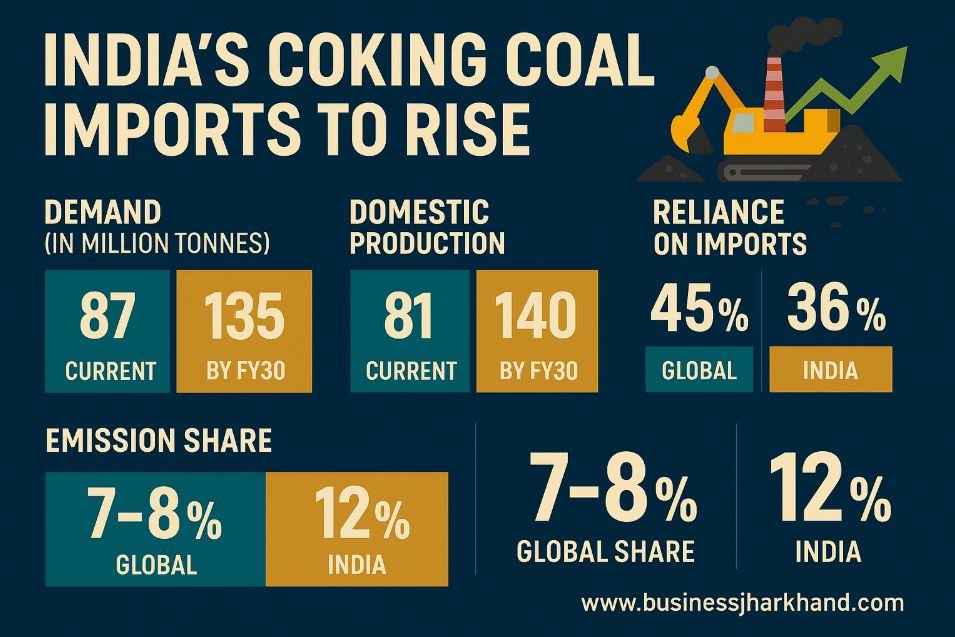
India’s coking coal imports are set to jump 42% to 115 million tonnes by 2030 even as domestic production doubles, according to a joint report by EY Parthenon and the Indian Steel Association (ISA). The study warned that import dependence will remain high as India races to achieve its ambitious 300-million-tonne steel capacity target by the end of the decade.
Also Read: Copper Demand May Hit 3.24 MT by FY30, Report Warned on Policy Impediment
Coking coal demand is expected to climb 55% to 135 MT by FY30 from 87 MT in FY25, with the steel industry accounting for nearly 95% of the requirement. Domestic raw coking coal production is projected to touch 140 MT by then, but washing capacity will be just 15 MT, keeping India dependent on overseas supplies. “India’s steel ambitions cannot be realized without addressing its heavy reliance on imported coking coal,” said Vinayak Vipul, partner, business consulting, EY Parthenon.
Also Read: Ganga Waterway Cargo Service Set to Begin Between Sahibganj and Patna
Policy Reforms and Supply Diversification Urged
The report, India’s Coking Coal Strategy: Building Resilience through Innovation, Sustainability and Policy, called for faster expansion of beneficiation facilities, building of strategic stockpiles at ports, and diversifying sourcing to mitigate supply shocks. It also recommended creation of a transparent pricing index and a national reserve to shield the industry from global price swings.
Sustainability Challenge for Steel Sector
The report flagged environmental concerns, noting that steelmaking accounts for 7–8% of global greenhouse gas emissions and nearly 12% of India’s total emissions. ISA president Naveen Jindal said securing high-quality, reliable coking coal supply is a “strategic necessity for national growth” and urged deeper Industry-Government collaboration to build a competitive and sustainable coal ecosystem that supports India’s steel roadmap through 2070.
Also Read: Damodar Valley, Once India’s Ruhr, Now Looking to Green Future
Join the WhatsApp Group of Business Jharkhand to Stay tuned for all the latest updates of industrial-political developments in Jharkhand.